
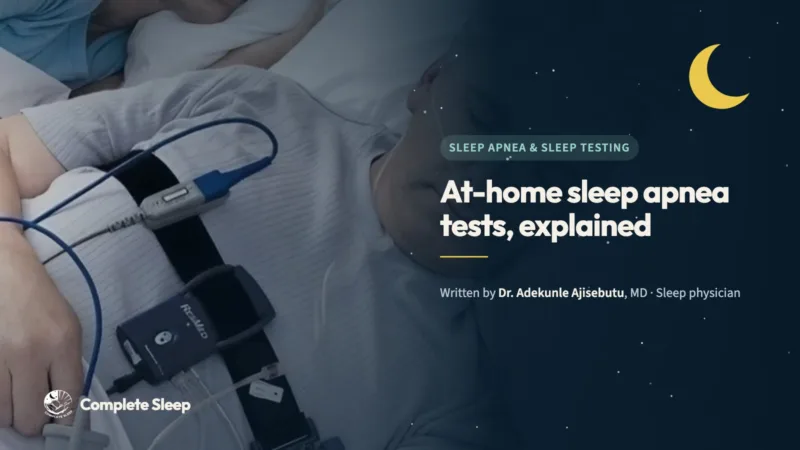
At-Home Sleep Apnea Tests Explained
How a home sleep apnea test works, what it measures, who it suits, who needs an in-lab study instead, and what results mean — explained without the sales pitch.

Written by the Complete Sleep editorial team
Pending medical review
Originally published Rewritten 4 min read
What changed September 2026: rewritten from scratch as a sourced explainer; the 2024 post at this address was a short overview.

Medical reviewer
Sleep Physician · Board-certified in Sleep Medicine
Pending medical review
In short
Sleep apnea is a condition in which breathing repeatedly stops or becomes shallow during sleep. The most common type, obstructive sleep apnea, happens when the upper airway narrows or closes; central sleep apnea happens when the brain’s breathing signal pauses. Loud snoring, witnessed pauses, gasping, morning headaches, and daytime sleepiness are common signs. It is diagnosed with a sleep study and treated with positive airway pressure (CPAP), oral appliances, positional therapy, weight management, or surgery, chosen with a clinician.
Key takeaways
Sleep apnea is a sleep-related breathing disorder. During sleep, breathing repeatedly stops (an apnea) or becomes much shallower (a hypopnea) for ten seconds or longer, many times a night. Each event tends to end with a brief arousal — usually too short to remember — which fragments sleep and stresses the heart and blood vessels.
Many people with sleep apnea have no idea their breathing is interrupted. The clues often come from a partner, or from how the days feel:
If you have dozed off, or nearly dozed off, while driving, do not drive until you have been assessed, and see a doctor promptly. Sleepiness at the wheel is the symptom of sleep apnea that matters most for safety.
Not everyone snores loudly, and women and older adults in particular may notice fatigue, insomnia, or mood changes more than the classic signs.
Sleep apnea can affect anyone, including children, but it is more common with excess body weight, a larger neck circumference, a narrow airway or large tonsils, male sex, older age, a family history, smoking, alcohol use in the evening, and nasal congestion. Being at risk does not mean you have it; it means a conversation with your doctor is reasonable if symptoms are present.
Repeated oxygen dips and arousals do more than make you tired. Untreated moderate-to-severe sleep apnea is associated with high blood pressure, heart rhythm problems, heart disease and stroke, type 2 diabetes, and a higher risk of motor-vehicle and workplace accidents from sleepiness. Treatment reliably improves sleepiness, quality of life and blood pressure and lowers crash risk; whether it prevents heart attacks and strokes is still being studied — the largest randomised trial so far (SAVE, 2016) did not show that CPAP prevented them in people with existing heart disease. The strongest reasons to get tested are how you feel and how safely you function.
Diagnosis requires a sleep study. Screening questionnaires such as STOP-Bang can estimate how likely sleep apnea is, but they cannot confirm or rule it out. The two main tests are:
Results are reported as the number of breathing events per hour (the AHI). In adults, 5–14 is generally described as mild, 15–29 as moderate, and 30 or more as severe, always interpreted alongside symptoms.
Treatment is chosen with a clinician based on the type and severity of sleep apnea, your anatomy, other health conditions, and what you can realistically use every night.
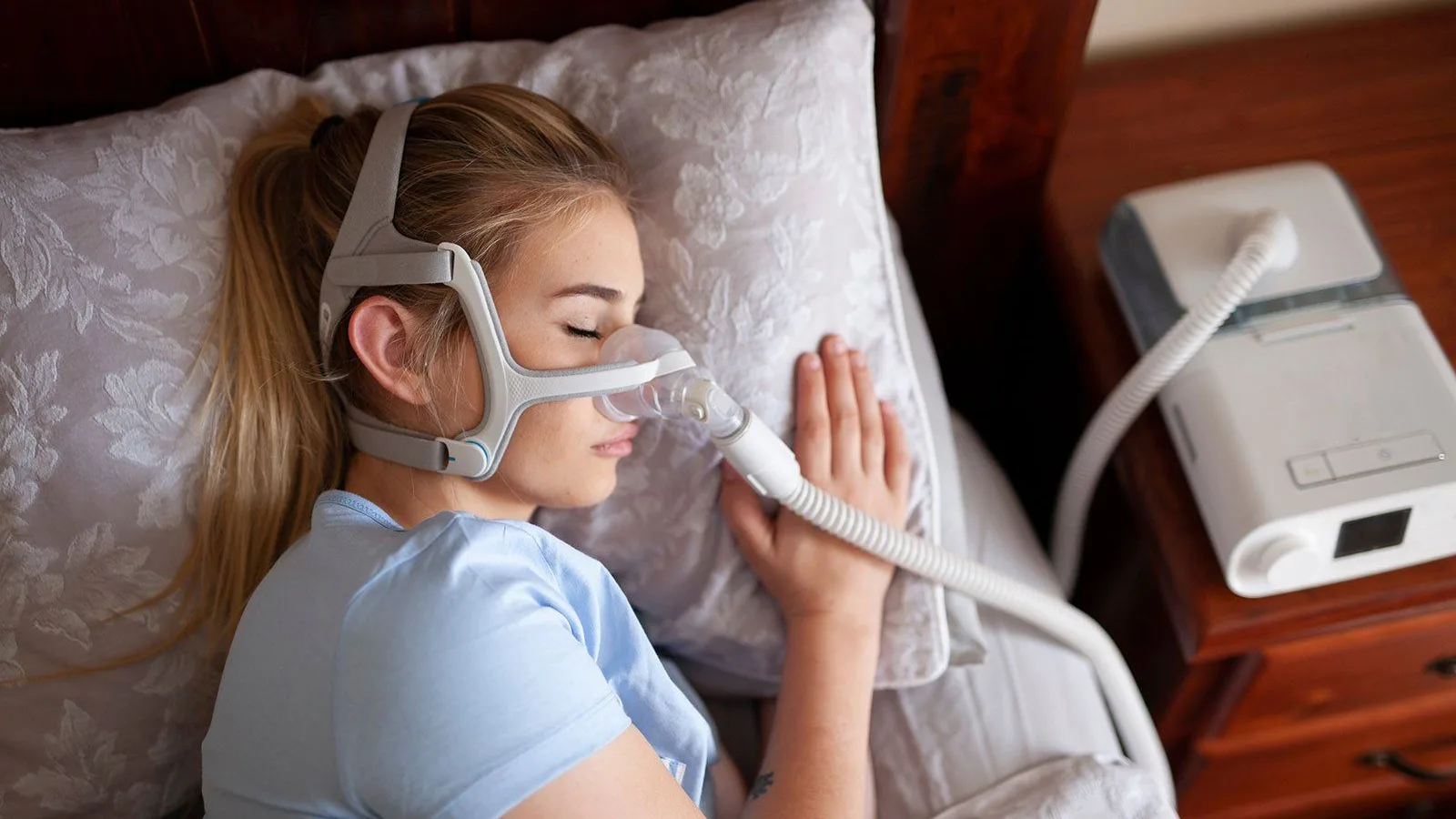
CPAP delivers gently pressurised air through a mask to keep the airway open. It is the most effective treatment for moderate-to-severe obstructive sleep apnea and is usually the first option offered. Modern devices are quieter and smaller than most people expect, and mask fit and early support make the biggest difference to whether it works for you.
A custom mouthpiece made by a dentist trained in sleep medicine holds the lower jaw slightly forward to keep the airway open. It is an option for mild-to-moderate OSA, or for people who cannot tolerate CPAP.
Some people have apnea mainly when lying on their back; devices or techniques that encourage side-sleeping can help. Weight management, avoiding alcohol in the evening, stopping smoking, and treating nasal congestion support every other treatment. See 10 lifestyle changes that can help manage sleep apnea.
For selected people, surgery on the nose, palate, tongue, or jaw, or an implanted nerve stimulator for the tongue, may be considered — usually after other options have been tried or ruled out. Central sleep apnea is managed differently, often by treating the underlying cause and, where appropriate, specialised ventilation devices.
If you snore loudly and are told you stop breathing, if you regularly wake gasping, or if daytime sleepiness affects your safety or your days, it is reasonable to raise sleep apnea with your doctor. You can bring notes on your symptoms, your STOP-Bang score, and any observations from a partner.
Sleep apnea is common, under-recognised, and treatable. The signs are often noticed first by someone else; the diagnosis needs a sleep study; and treatment, once it fits your life, usually improves sleep, energy, and long-term health. This article is education, not a diagnosis — the next step, if any of it sounds familiar, is a conversation with your own clinician.
No. Many people snore without sleep apnea. Snoring becomes a concern when it is loud and regular and comes with pauses, gasping, or daytime sleepiness.
Mild, position-related, or weight-related obstructive sleep apnea can improve with lifestyle changes, but moderate-to-severe sleep apnea generally does not resolve on its own and benefits from treatment.
Yes. In children it is often linked to enlarged tonsils or adenoids and may show up as restless sleep, mouth breathing, behaviour or attention problems, or bedwetting. A paediatrician can advise on assessment.
That depends on where you live and your health system. In many places a family doctor can order a sleep study; see the regional guides on this site for how referral and coverage work in your area.
Related reading
Two-minute check
Wondering about snoring or daytime sleepiness? STOP-Bang is scored in your browser.
Take the self-checkHow a home sleep apnea test works, what it measures, who it suits, who needs an in-lab study instead, and what results mean — explained without the sales pitch.
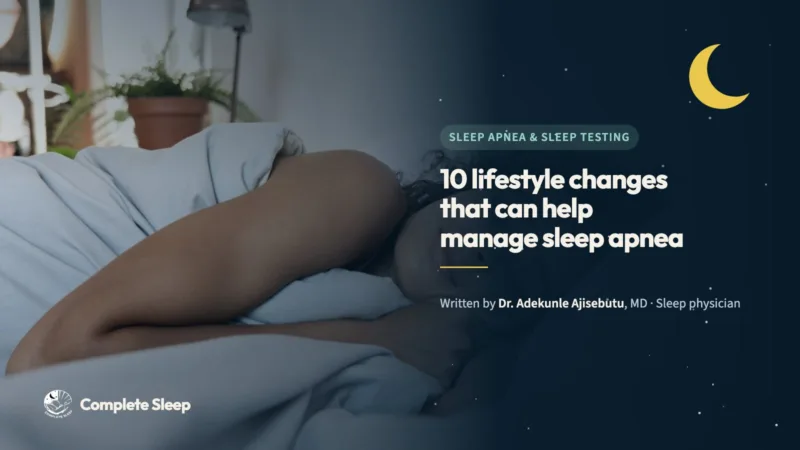
Weight, side-sleeping, alcohol, smoking, nasal congestion and more — the lifestyle habits that support sleep apnea care, with the evidence behind each.
2-minute tool
Eight yes/no questions, scored in your browser. A starting point for a conversation with your doctor.
Take the self-check