

How Sleep Works: Stages, Cycles and a Normal Night
The four sleep stages, the 90-minute cycle, the two systems that decide when you sleep, how needs change with age, and what a normal night looks like — including the wakings you forget.

Sleep physician · Founder and medical reviewer, Complete Sleep
Areas of specialization (as listed on MercyOne)
The four sleep stages, the 90-minute cycle, the two systems that decide when you sleep, how needs change with age, and what a normal night looks like — including the wakings you forget.
Insomnia explained: how it is defined, why it becomes self-sustaining, why CBT-I is the first-line treatment, and when to see a doctor.
Why crossing time zones scrambles your body clock, why flying east is harder, and a practical plan — light, timing, naps, melatonin — to recover in days.
Night and rotating shifts fight your body clock. A practical guide: anchor sleep, light, caffeine timing, naps, the drive home, and when to see a doctor.

Why sleep and mood sag in northern winters, how daylight sets the body clock, what morning light and timing do about it, and when low mood needs a doctor.
What the clock change does to your body clock, why spring forward is harder than fall back, what research shows about the days after, and a four-day plan.
Why your body has to cool down to fall asleep, what heat and humidity do to sleep, and evidence-based ways to sleep better in summer — bedroom, bedding, timing.
Recommended sleep hours by age from the AASM and CDC tables, why individual needs vary, the signs of too little, and when to see a doctor.
Waking at 3am is common. Learn why the second half of the night is lighter, what stress, alcohol, light and sleep apnea add, and what actually helps.
Melatonin is a timing signal, not a sedative. Where the evidence supports it, where it is weak, how much to take, when, and who should ask a doctor first.
Why adults snore, what makes it worse, the red flags that point to sleep apnea, when to see a doctor, and the measures that quiet simple snoring.
Is napping good for you? The ideal nap length and timing, how a caffeine nap works, why to skip naps with insomnia, and when sleepiness is a red flag.
Plain-language guide to restless legs syndrome: what it feels like, why it is often missed, links with iron and pregnancy, and when to see a doctor.
Regular exercise improves sleep quality and helps you fall asleep faster. What the research says about evening workouts, timing and your body clock.
Sleep trackers estimate sleep from movement, heart rate and oxygen. Learn what they get right, where they fall short, and when a sleep study is needed.
Sleep paralysis is frightening but harmless. Learn what causes it, how common it is, how to end an episode, and when it may point to narcolepsy.
Caffeine lingers for hours. Learn the half-life, the six-hour study, hidden sources in mg, decaf facts and a two-week test to find your own cut-off.
Alcohol makes you fall asleep faster, then breaks up the second half of the night: less REM, more waking, worse snoring and apnea. What to do instead.
Meal timing beats 'sleep foods': late meals and reflux, the two-to-three-hour rule, light snacks, and the thin evidence for tart cherry and magnesium.
Why worry feels loudest in bed, how an anxious night differs from an anxiety disorder, and CBT-informed tools that calm the mind so sleep can come.
Sleep problems and depression feed each other. Learn the typical patterns, why CBT-I helps mood, how antidepressants affect sleep and when to get help.
Blue light is only part of the story. A calm look at what screens before bed really do to sleep, why night mode underdelivers, and a rule that works.
Slept a full night and still exhausted? Why sleep inertia, social jet lag, alcohol, sleep apnea and low iron cause morning tiredness, and what helps.
You can spend nine hours in bed and still wake up tired. What sleep quality means (with the 85% benchmark), why extra time in bed backfires, and what unrefreshing sleep can signal.
Weight, side-sleeping, alcohol, smoking, nasal congestion and more — the lifestyle habits that support sleep apnea care, with the evidence behind each.
A racing mind at bedtime is common and manageable. Ten practical ways to lower arousal in the evening, what the evidence says about each, and how to tell stress from anxiety that needs care.
Sleep hygiene explained: what it is, the eight habits that matter most with the evidence behind each, the common mistakes that undo them, and when habits are not enough.
A practical guide to a bedtime routine for adults: why routines work, a 60-minute wind-down you can repeat on your worst day, what to do when you cannot sleep, and when a routine is not enough.
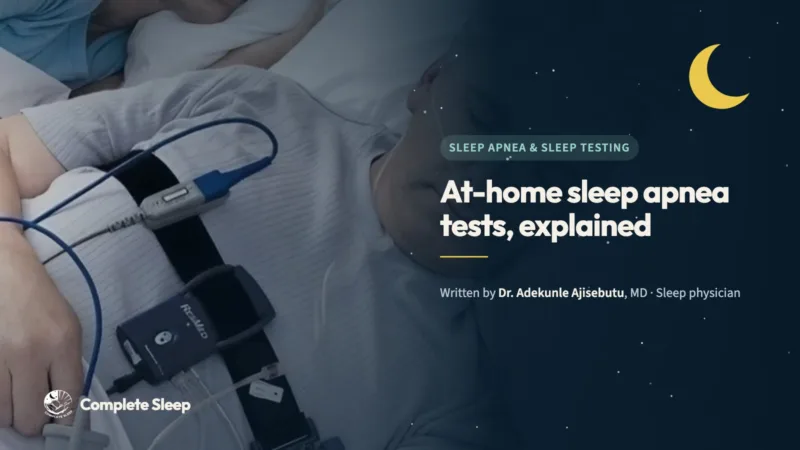
How a home sleep apnea test works, what it measures, who it suits, who needs an in-lab study instead, and what results mean — explained without the sales pitch.
A plain-language guide to sleep apnea: obstructive vs. central, signs to notice, health risks, how it is diagnosed, and treatment options.